Zero-VOC Paint: Why It Matters for Your Family's Health
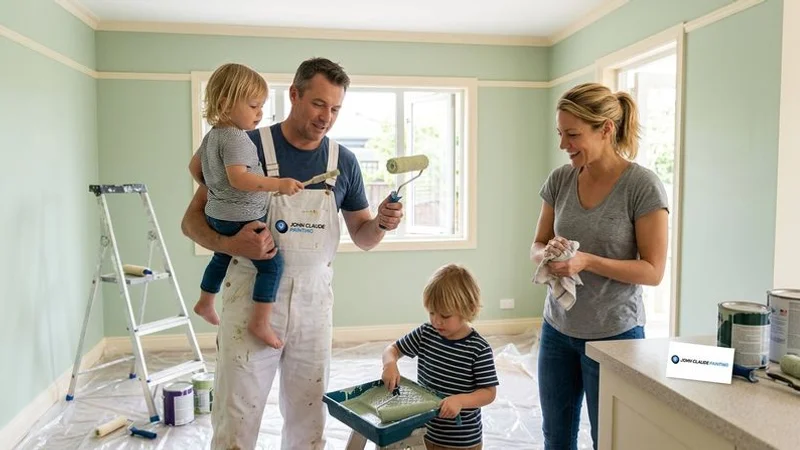
You know that distinct, sharp smell that hits you the moment you walk into a freshly painted room?
Most of us associate it with “newness” or a job well done.
In reality, that scent is a biological warning signal.
It indicates the presence of chemicals actively evaporating into the air you and your family breathe.
For homeowners in the Phoenix Valley, where we keep windows sealed against the heat for months at a time, this issue is compounded.
We see this concern come up constantly on our job sites.
Parents worry about nurseries, and pet owners worry about their dogs sleeping in renovated rooms.
Fortunately, the industry has shifted.
You no longer have to choose between a durable, washable finish and safe indoor air quality.
Here is a breakdown of what is actually in your paint, how the technology has changed, and why this matters specifically for our Arizona homes when planning an interior painting project.
What Are VOCs and Why Do They Off-Gas?
Volatile Organic Compounds (VOCs) are carbon-based chemicals that vaporize easily at standard room temperatures.
Paint manufacturers traditionally used these solvents to keep the paint in liquid form and help it level out smoothly on your wall.
Once the paint is applied, these chemicals evaporate into the air.
This process is called off-gassing.
According to the EPA, the concentration of these volatile pollutants is consistently two to five times higher indoors than outdoors.
This statistic is alarming when you realize how much time we spend inside.
While the strongest odors usually dissipate within a few days, the off-gassing process does not stop there.
Standard paints can continue releasing low levels of chemicals like formaldehyde, benzene, and toluene for six months or more after the walls feel dry to the touch.
The American Lung Association notes that these specific compounds can trigger headaches, nausea, and respiratory irritation, particularly in children and those with asthma.
Zero-VOC vs. Low-VOC: The Hard Numbers
The labels on paint cans can be confusing.
The difference between “low” and “zero” isn’t just marketing fluff; it is a measurable standard based on grams per liter (g/L) of volatile compounds.
We use the following threshold guide to help our clients make informed decisions:
| Paint Category | VOC Content (g/L) | Odor Profile | Best Application |
|---|---|---|---|
| Traditional / Oil-Based | 250 - 500 g/L | Intense, lingering | Exterior trim, industrial metals |
| Low-VOC | < 50 g/L | Noticeable but mild | Living rooms, hallways |
| Zero-VOC | < 5 g/L | Barely detectable | Nurseries, bedrooms, home offices |
The “Tint Trap” Warning
There is a critical detail that many hardware store employees fail to mention.
The “Zero-VOC” claim on the label typically applies only to the white base paint.
Universal colorants used to tint paint to your desired shade are often composed of glycols and solvents.
If you take a zero-VOC base and ask for a deep charcoal or navy blue using standard colorants, you might inadvertently raise the VOC load back up to 50 g/L or higher.
Our professional advice:
Always verify that the store uses zero-VOC colorants.
Major brands have addressed this gap explicitly.
Sherwin-Williams uses ColorCast Ecotoner technology, which adds zero VOCs to the paint regardless of the color.
Dunn-Edwards also employs a proprietary zero-VOC tinting system.
Ensuring your painter uses these specific systems guarantees the paint stays clean, even if you choose a bold, dark color.
Do Zero-VOC Paints Perform as Well?
This is the most common question we field during consultations.
Homeowners remember the early days of eco-friendly paint.
Ten years ago, “green” paints were often thin, required three or four coats to hide the old color, and would scuff if you looked at them wrong.
That performance gap has effectively closed.
Modern acrylic and waterborne technologies now allow zero-VOC paints to rival the durability of traditional latex options.
Top-Tier Zero-VOC Recommendations
We rigorously test products in real-world Phoenix homes before recommending them.
Two specific lines have proven their worth in our projects:
- Sherwin-Williams SuperPaint Air Purifying: This product goes a step beyond just being “safe.” Its formula actively breaks down household odors from pets and cooking. It also features antimicrobial agents that inhibit the growth of mold and mildew, which is a significant benefit for bathroom renovations.
- Dunn-Edwards Everest: We love this paint for its hardness. It is a self-priming, zero-VOC paint that offers exceptional washability. It stands up to the “scrub test” (ASTM D2486) better than many standard paints, making it ideal for high-traffic hallways.
What You Can Expect
When you choose these modern formulations, you do not sacrifice quality.
Current specs deliver:
- True Washability: You can wipe down walls without burnishing the finish.
- Superior Hide: High-quality solids ensure you get full coverage in the standard two coats.
- Same-Day Re-Entry: Since there are no harsh solvent fumes, you can paint a bedroom in the morning and safely sleep in it that night.
Why This Matters in Phoenix
Our local climate creates a specific set of challenges for indoor air quality.
Most advice online suggests “opening windows for ventilation” after painting.
In the Phoenix Valley, that is simply not an option for eight months of the year.
The “Sealed Home” Effect
Arizona homes are built to be airtight to maximize energy efficiency.
We seal our houses like thermoses to keep the expensive refrigerated air inside.
Because we lack natural cross-ventilation, any VOCs released inside a Phoenix home get trapped.
They circulate continuously through the HVAC system, concentrating in the bedrooms and living areas.
This creates a “chemical soup” effect that degrades indoor air quality far longer than it would in a drafty, older home in a temperate climate.
Maricopa County Compliance
The Maricopa County Air Quality Department is strict about ground-level ozone.
They enforce Rule 335 to limit emissions from architectural coatings because VOCs contribute to our region’s smog issues.
By choosing zero-VOC products, you do more than just follow the law.
You are actively contributing to cleaner air for the entire valley while protecting your immediate household.
This choice becomes non-negotiable when:
- You are renovating while living in the home.
- Pregnant women or infants are present.
- The project takes place during summer when opening windows is impossible.
Our Commitment to Healthy Painting
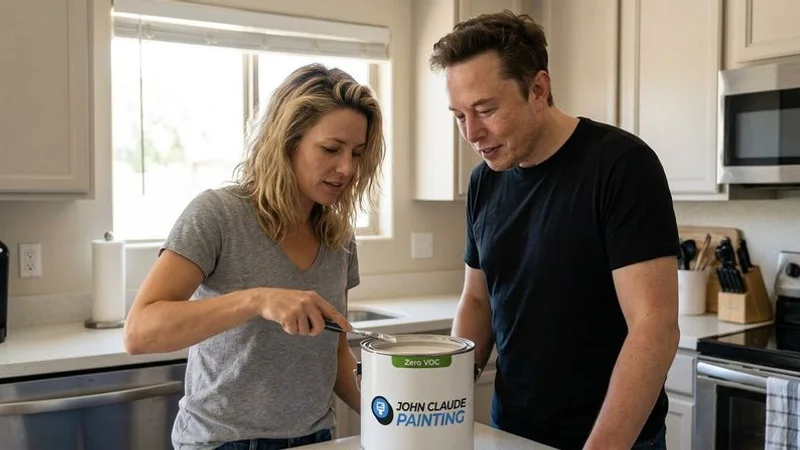
At John Claude Painting, we treat your home environment with the same care we would treat our own.
We prioritize using zero-VOC and low-VOC options for interior projects because we know the science supports it.
Your walls should look beautiful without compromising the air you breathe.
Our team is ready to help you navigate these choices, from the durability of Everest to the air-purifying tech of SuperPaint.
Contact us for a free estimate to discuss how we can bring safer, higher-quality color into your home.
John Claude Painting Team
Professional Painting Contractor
Need Professional Painting Help?
Get a free, no-obligation estimate from our experienced team.
Get Free Estimate