Stucco Maintenance Guide for Phoenix Homeowners

Living in the Valley means dealing with heat that melts shoe soles and UV rays that bleach asphalt.
We know exactly what that intense exposure does to your home’s stucco exterior.
Stucco is the dominant finish here for a reason, as it offers incredible durability against our unique climate.
But even the toughest walls need help to survive the swing from 110°F afternoons to monsoon downpours.
Our team sees the damage every season.
ignoring small cracks today leads to expensive repairs tomorrow.
If you are worried about the current state of your walls, Contact John Claude Painting can provide a professional assessment.
Let’s look at why your stucco acts the way it does and the specific steps you can take to protect it.
The Phoenix Factor: Why Your Stucco Cracks
Your home faces a specific set of stressors that don’t exist in other parts of the country.
We see three primary environmental forces that degrade masonry in Maricopa County.
Extreme Thermal Shock
Materials expand and contract as temperatures fluctuate.
The Phoenix area sees daily temperature swings of 30-40°F, which forces your stucco to stretch and shrink constantly.
Surface temperatures on south-facing walls can actually exceed 160°F during a July afternoon.
This movement eventually creates hairline fractures.
You will typically see these on south and west-facing walls first since they absorb the most solar heat.
UV Radiation Damage
The sun here doesn’t just make things hot.
It chemically alters them.
High UV index ratings in Arizona (often hitting 11+) break down the acrylic binders in exterior paint and the cementitious bonds in the top coat of stucco.
You might notice this as “chalking.”
This is where the color looks washed out and leaves a powdery residue on your hand.
Monsoon Moisture Intrusion
We stay dry for months, and then June through September brings sideways rain.
Water is the enemy of stucco if it gets behind the surface.
A small crack that seems harmless in May can become a major entry point for water during a July microburst.
This moisture leads to mold or structural rot within the wood framing.
Annual Inspection Checklist
You should walk your property at least once a year.
Spring is the best time to do this.
Ideally, check right after the winter rains and before the summer heat really sets in.
Specific Damage to Spot
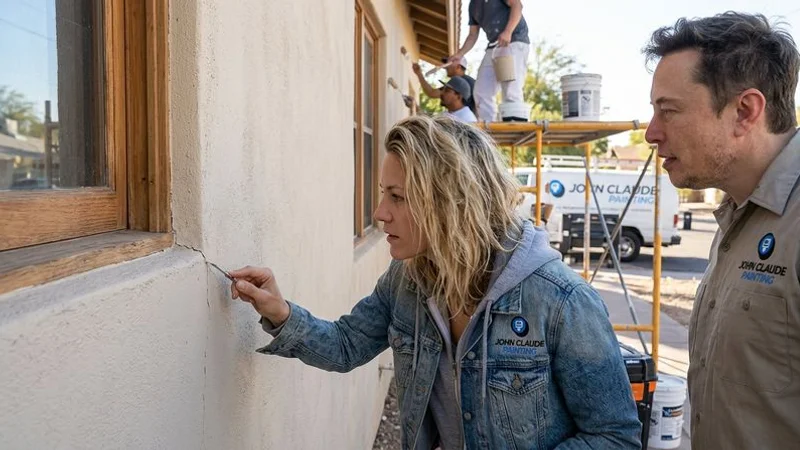
The “Hairline” Rule Cracks less than 1/16 inch (about the width of a credit card) are usually cosmetic. These are normal in our climate and can be sealed easily.
Structural Warning Signs Cracks wider than 1/8 inch or those that form a “stair-step” pattern often indicate foundation settling. You need a pro to look at these before you attempt to patch them.
The “Hollow Sound” Test Tap on areas where the stucco looks bulged or discolored. A hollow, thumping sound suggests the stucco has delaminated (pulled away) from the lath beneath it.
Pest Damage Look closely at your pop-outs and foam trim. Woodpeckers and flickers love to drill into the EIFS (Exterior Insulation and Finish System) commonly used for decorative trim in Phoenix homes.
Critical Vulnerability Zones
Don’t just look at the flat walls.
Most failures happen where the stucco meets another material.
- Weep Screeds: Check the metal strip at the very bottom of your wall. If it is buried by dirt or gravel then moisture cannot escape.
- Roof Transitions: Inspect the kick-out flashing where your roof gutter meets the wall.
- Penetrations: Check the sealant around hose bibs, dryer vents, and light fixtures.
- Parapet Walls: Examine the top of flat roof walls where the stucco meets the roofing material.
DIY Maintenance: Steps You Can Take
Cleaning Your Stucco
Dust storms and pollution leave a layer of grime that can dull your home’s appearance.
We recommend washing your walls annually to remove this buildup.
The Low-Pressure Method Never use high-pressure settings on stucco. Keep the pressure under 1,500 PSI to avoid blasting off the texture or forcing water into the wall cavity.
Nozzle Selection Use a 40-degree (white) nozzle tip to spread the water impact over a wider area.
Cleaning Solution Recipe Mix warm water with a mild detergent. For tougher stains you can add Trisodium Phosphate (TSP) which is available at most local hardware stores.
Technique Matters Work from the bottom to the top to prevent dirty water from running down and staining dry areas. Rinse thoroughly with a garden hose.
Sealing Minor Cracks
You can handle the small cosmetic fractures yourself with the right supplies.
Our crews use specific textured caulks that blend better than smooth silicone.
- Clean the Area: Use a wire brush to remove loose debris and old paint from the crack.
- Select the Right Product: Buy a textured acrylic caulk like Mor-Flexx or Sikaflex. Smooth caulk will stand out like a scar against the stucco finish.
- Application: Press the caulk deep into the crack rather than just wiping it over the surface.
- Blending: Dab the wet caulk with a stiff brush or a damp sponge to match the surrounding texture.
Landscaping Management
Your plants can be your stucco’s worst enemy.
- Irrigation adjustment: Point sprinkler heads away from the house so walls don’t get soaked daily.
- Clearance: Trim bushes and trees to maintain a 12-inch gap from the wall which allows for airflow and inspection.
- Vine removal: Plants like Cat’s Claw or Bougainvillea can embed into the finish and rip chunks out when removed.
When to Call a Professional
Some issues are too risky for a weekend DIY project.
We advise bringing in an expert if you see specific warning signs.
Recurring Cracks
If a crack comes back within six months of repair, you have an active movement issue.
This usually implies that the foundation is shifting or a structural beam is warping.
Efflorescence
White, salty deposits on the wall mean water is migrating from the inside out.
Painting over this won’t fix the leak source.
The salts are actually dissolved minerals from the cement that crystallize on the surface as water evaporates.
Large Scale Delamination
If large sections of the wall feel spongy or are bulging out, the substrate is compromised.
This requires cutting out the bad section and rebuilding the layers.
Leaving this alone can rot the sheathing and studs behind the stucco.
The Elastomeric Advantage
Standard acrylic paint often fails to bridge the gaps caused by heat expansion.
Our preferred solution for Phoenix homes is elastomeric coating.
These high-build coatings are essentially a thick, rubberized layer that can stretch without breaking.
Leading products like Sherwin-Williams Loxon XP or Dunn-Edwards Evershield are formulated specifically for this purpose.
| Feature | Standard Acrylic Paint | Elastomeric Coating |
|---|---|---|
| Flexibility (Elongation) | Low (< 50%) | High (300% - 600%) |
| Film Thickness | 2-3 mils (Dry) | 10-20 mils (Dry) |
| Crack Bridging | None | Bridges gaps up to 1/16” |
| Waterproofing | Breathable/Porous | Water-tight seal |
| Phoenix Lifespan | 5-7 Years | 10+ Years |
Local suppliers formulate these specifically for the Southwest climate.
The initial material cost is roughly 20-30% higher than standard paint.
However, the extended lifespan and reduced repair costs make it the smarter financial choice for Arizona homeowners.
Recommended Maintenance Schedule
Keeping a schedule prevents surprise expenses.
We suggest syncing your maintenance with the cooler months.
| Task | Frequency | DIY or Pro? |
|---|---|---|
| Visual Inspection | Annually (March/April) | DIY |
| Clear Weep Screeds | Annually | DIY |
| Power Wash | Annually | DIY (Low Pressure) |
| Seal Hairline Cracks | As needed | DIY |
| Touch-up Paint | Every 2-3 years | DIY or Pro |
| Full Repaint (Elastomeric) | Every 8-12 years | Professional |
| Major Crack Repair | As needed | Professional |
Ignoring these intervals usually leads to water damage that costs thousands to remediate.
Stucco Maintenance Guide for Phoenix Homeowners is about consistency rather than constant labor.
If you are unsure about the condition of your exterior, Contact John Claude Painting for a free assessment of your Phoenix home’s stucco condition.
John Claude Painting Team
Professional Painting Contractor
Need Professional Painting Help?
Get a free, no-obligation estimate from our experienced team.
Get Free Estimate