How Often Should You Repaint Your Home's Interior?
Knowing when to refresh your walls is about more than just aesthetics.
It is a strategic maintenance decision that protects your drywall and investment.
We have found that most homeowners wait until they see peeling or severe fading before picking up the phone.
Waiting that long often turns a standard repaint job into a restoration project involving costly drywall repairs.
Our team wants to help you spot the sweet spot between “too soon” and “too late.”
This guide outlines exactly how the unique Phoenix environment impacts your interior paint and when you should actually schedule that update.
The Real Timeline: Room-by-Room Breakdown
Every room in your house endures a different level of stress.
A guest bedroom might look pristine for a decade.
Your kitchen likely takes a beating every single day.
We use this baseline schedule for Phoenix homes based on traffic patterns and environmental exposure:
| Area | Ideal Repaint Cycle | Primary Wear Factors |
|---|---|---|
| Kitchens | 3-4 years | Grease splatter, steam, rapid temperature shifts |
| Bathrooms | 3-4 years | Humidity spikes, cleaning chemicals, mildew risk |
| Hallways | 2-3 years | constant physical contact, shoulder rubs, shoe scuffs |
| Living Rooms | 5-7 years | UV exposure from windows, furniture friction |
| Adult Bedrooms | 5-7 years | Low impact, stable temperature |
| Kids’ Rooms | 2-3 years | Crayons, adhesive tape, high impact play |
| Ceilings | 7-10 years | Gravity-induced settling cracks, dust accumulation |
Why Kitchens and Bathrooms Fail First
These areas are the “wet zones” of your home.
Cooking releases oils and steam that settle on your walls.
Over time, this creates an acidic film that breaks down the resin in standard acrylic paints.
We recommend using high-performance paints like Sherwin-Williams Emerald Urethane or Dunn-Edwards Aristoshield in these areas.
These products contain specialized binders that resist moisture penetration and allow for aggressive scrubbing without burnishing the finish.
The Hallway Factor
Hallways are the highways of your home.
You likely brush against these walls multiple times a day without noticing.
This friction creates “burnishing,” which looks like shiny, polished spots on the wall.
Standard flat or matte paints cannot withstand this traffic.
Upgrading to a high-quality satin or eggshell finish in these transitional spaces extends the lifespan significantly.
Critical Signs Your Paint Has Failed
You do not need a calendar to tell you when it is time.
Your walls will reveal specific physical symptoms that indicate the protective layer is compromised.
Watch for these four specific indicators:
- The “Chalk” Test: Rub your hand lightly over a sun-lit wall. If a fine powder comes off on your palm, the paint binder has disintegrated due to UV exposure.
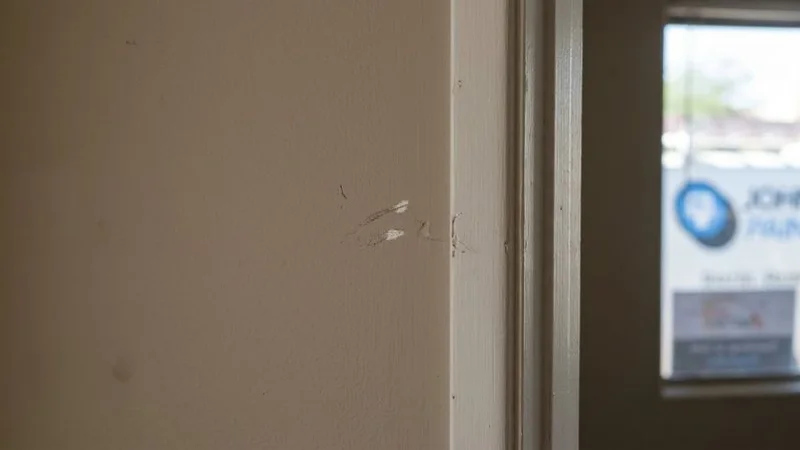
- Stress Cracks: Look above door frames and windows. Phoenix homes settle and shift on the caliche soil, causing hairline fractures that allow moisture to reach the drywall paper.
- Shadowing: If you move a picture frame and see a distinct dark square, your surrounding paint has faded significantly. This is common in rooms with south-facing windows.
- Flaking Near Baseboards: This usually signals that the original adhesion was poor or that vacuum cleaners have repeatedly chipped the seal.
Pro Tip: If you see bubbling paint near a bathroom or kitchen sink, do not just paint over it. This is a red flag for an active leak or trapped moisture that requires plumbing attention first.
The Phoenix Factor: Dry Heat and Interiors
The desert climate creates a unique set of challenges for interior paint.
Most national guides focus on humidity, but here we deal with extreme aridity.
The Hidden Brittleness Phoenix air often drops below 10% humidity.
This lack of moisture causes lower-quality paints to lose flexibility and become brittle.
We see this often in older homes where the paint snaps and flakes off rather than peeling in sheets.
Thermal Expansion Stress Your home expands and contracts as temperatures swing from 100°F+ days to cooler nights.
Even with HVAC, your exterior walls transfer this thermal stress to your interior drywall.
This movement requires a paint with high tensile strength (elasticity) to stretch without cracking.
Premium 100% acrylic paints are designed to handle this movement much better than vinyl-acrylic blends often used by volume builders.
5 Ways to Extend Your Paint’s Lifespan
You can delay the need for a full repaint by adopting a few proactive maintenance habits.
1. Store Your Paint Inside
Never store leftover paint in your garage.
The Phoenix summer heat in a garage can exceed 140°F.
This heat cooks the chemicals in the can, ruining the paint within a single summer.
Keep touch-up cans in a climate-controlled closet to ensure the color matches when you need it.
2. Wash, Don’t Scrub
Dirt accumulates on textured walls over time.
Use a soft sponge with warm water and a drop of mild dish soap.
Avoid “magic erasers” on painted walls unless you plan to repaint soon.
They work by sanding down the surface, which removes the paint’s protective sheen along with the stain.
3. Upgrade Your Sheen
Flat paint hides wall imperfections but absorbs oils and dirt like a sponge.
Choosing a Satin or Eggshell finish for high-traffic areas creates a non-porous barrier.
This allows you to wipe away scuffs that would otherwise permanently stain a flat finish.
4. Use UV-Blocking Window Treatments
The Arizona sun is a paint killer.
UV rays bleach pigments rapidly.
Installing solar shades or Low-E window film can reduce UV penetration by up to 99%.
This simple step keeps your living room colors vibrant for years longer.
5. Address Settlement Cracks Early
Small hairline cracks are inevitable in our region.
Fill these with a high-quality elastomeric spackle as soon as they appear.
Painting over a crack without filling it is a temporary bandage that will reopen within months.
Making the Right Investment
A fresh coat of paint does more than brighten a room.
It seals your drywall against dust, resists wear, and improves your indoor air quality by encapsulating old surfaces.
We believe that using the right materials for our specific desert environment is the key to longevity.
Ready for a refresh? Contact John Claude Painting for a free interior painting estimate.
John Claude Painting Team
Professional Painting Contractor
Need Professional Painting Help?
Get a free, no-obligation estimate from our experienced team.
Get Free Estimate