Elastomeric Paint for Stucco: What You Need to Know
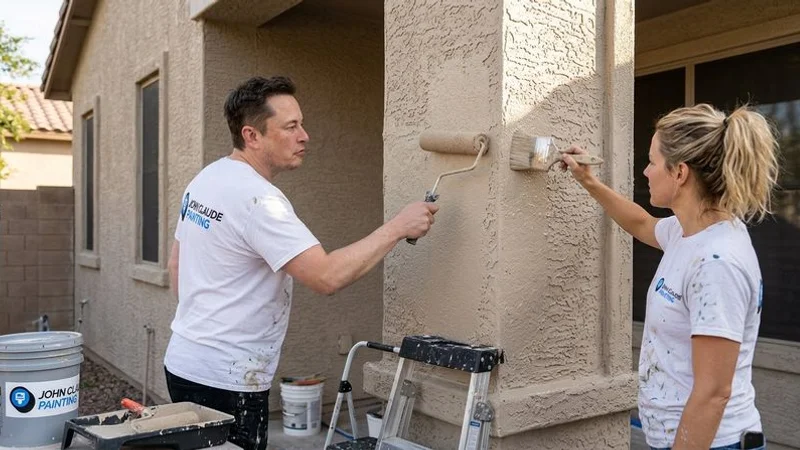
If you own a stucco home here in the Valley, you already know standard paint often fails after just a few summers. The intense UV exposure and rapid temperature shifts create a cycle of expansion that rigid coatings simply cannot handle.
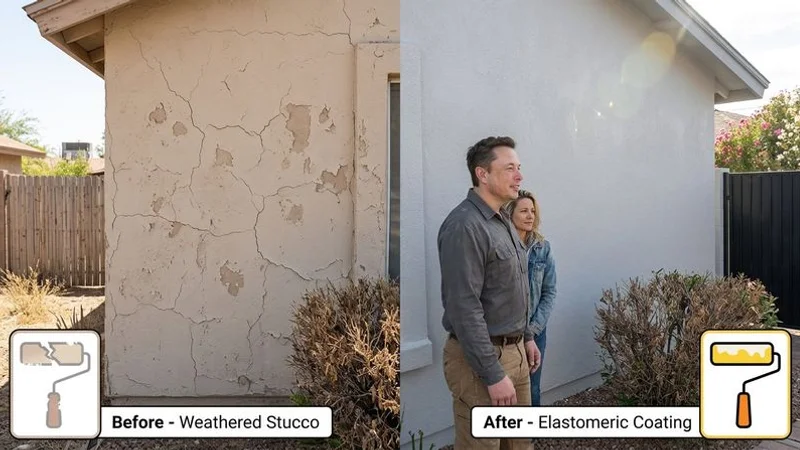
We see this struggle every day on exteriors from Scottsdale to Gilbert. The hairline cracks start small, but they eventually let moisture seep into the substrate.
Elastomeric paint is the solution we recommend most often to stop this cycle. This specialized coating is engineered to handle the exact challenges that Arizona’s desert climate throws at your walls. It performs far better than standard exterior paint.
What Is Elastomeric Paint?
Elastomeric paint is a high-build coating that creates a thick, waterproof membrane over your stucco surface. Standard acrylic latex paint typically dries to a film thickness of 2 to 3 mils.
High-quality elastomeric coatings build up to 10 to 20 mils. This is roughly 5 to 10 times the thickness of the paint you might find at a standard hardware store.
The term “elastomeric” refers to the polymer’s ability to stretch. A quality coating can elongate significantly and return to its original shape without rupturing. This flexibility allows the paint to move with your home as it heats up and cools down.
Why Elastomeric Paint Matters in Phoenix
Crack Bridging Capabilities
Phoenix homes endure some of the most extreme thermal cycling in the country. Surface temperatures on a south-facing wall can swing from 70°F at sunrise to over 160°F by mid-afternoon.
Stucco expands and contracts constantly under this stress. Standard paint is too rigid to cope, so it snaps and flakes.
We rely on elastomeric products because they can stretch 300% to 500% of their original dimension. This elasticity bridges existing hairline cracks. It also prevents new fissures from breaking the seal and exposing the raw stucco beneath.
Waterproofing Against Monsoons
Our desert climate is dry for most of the year, but monsoon season brings a different threat. Driving rains hit vertical surfaces at speeds exceeding 50 mph.
Standard paint offers minimal resistance to wind-driven rain. Elastomeric paint forms a continuous, pinhole-free barrier.
This membrane offers four specific layers of protection:
- Stops rain from penetrating through surface cracks.
- Blocks moisture migration into porous masonry.
- Reduces the potential for interior drywall damage during storms.
- Prevents mold growth behind the stucco system.
UV Protection and Longevity
The UV Index in Phoenix frequently hits 11 (Extreme) during summer months. This radiation breaks down the binders in standard paint, leading to rapid chalking and fading.
Elastomeric coatings are formulated with higher concentrations of titanium dioxide and UV inhibitors. Their sheer thickness provides a sacrificial layer that takes years longer to degrade. You will notice significantly better color retention and less chalking compared to traditional exterior paints.
Elastomeric vs Standard Exterior Paint
When you look at the specifications side-by-side, the performance gap becomes clear.
| Feature | Standard Acrylic Exterior | Elastomeric Coating |
|---|---|---|
| Dry Film Thickness | 2-3 mils | 10-20 mils |
| Elongation | 10-50% | 300-500% |
| Crack Bridging | None | Up to 1/16” |
| Wind-Driven Rain | Low Resistance | High Resistance (98+ mph) |
| Perm Rating | High (Breathable) | Variable (Semi-permeable) |
| Coverage per Gallon | 300-400 sq ft | 60-100 sq ft |
| Lifespan in AZ | 5-7 years | 10-15 years |
The True Cost Comparison
The initial price tag for elastomeric paint is higher because you need more gallons to achieve the required thickness. The long-term math tells a different story.
Standard paint scenario: Repainting occurs every 6 years. At an average cost of $4,500 per job, you spend roughly $750 per year of protection.
Elastomeric paint scenario: Repainting occurs every 12 years. At an average cost of $6,500, your cost drops to roughly $541 per year.
Over a 20-year period, the average Phoenix homeowner saves $3,000 to $5,000 by reducing the number of repaint cycles.
Application Requirements
Surface Preparation
Elastomeric paint acts like a heavy blanket, but it is only as good as the surface preparation. Skimping here leads to failure.
We follow a strict protocol to ensure adhesion:
- Pressure Washing: We remove all loose dirt, chalk, and efflorescence (white salt deposits) that could break the bond.
- pH Testing: New stucco or patched areas must have a pH level between 6 and 9 to prevent “alkali burn” on the coating.
- Detail Patching: While the paint bridges hairlines, cracks wider than 1/16 inch require a textured elastomeric patching compound first.
- Primer Application: A masonry conditioner or primer is essential on chalky or bare surfaces to lock down the substrate.
Professional Application Method
You cannot apply this material like standard house paint. It is thick, heavy, and unforgiving if applied incorrectly.
Our teams use specific equipment to build the necessary film thickness:
- Heavy-Duty Airless Sprayers: The machine must pump at least 0.75 to 1.0 gallons per minute to handle the viscosity.
- Large Spray Tips: We use spray tips ranging from .021 to .027 size to prevent clogging and ensure even flow.
- Back-Rolling: This is a non-negotiable step. After spraying, we physically roll the wet paint into the stucco texture to fill pinholes.
- Mil Gauge Testing: We measure the wet film thickness during application to guarantee we are hitting the manufacturer’s specs.
When NOT to Use Elastomeric Paint
This product is powerful, but it is not a universal fix. There are specific scenarios where we advise against it.
Avoid elastomeric coatings in these situations:
- Fresh Stucco: Masonry needs at least 30 days to cure and release moisture before being sealed.
- Moisture Issues: If water is getting behind the wall (from a roof leak or bad flashing), elastomeric paint will trap that water and cause blistering.
- Wood or Metal: These formulations are designed specifically for masonry and will not bond correctly to trim or siding.
- Multiple Existing Layers: If a home already has many layers of old paint, the weight of a new elastomeric coat can pull the old paint right off the wall.
Choosing the Right Product
Top Brands for Phoenix
Not all thick paints perform well in the desert heat. We have tested dozens of products to find the ones that last.
Our top recommendations for Arizona homes include:
- Dunn-Edwards Endurastic: This is a local favorite formulated specifically for the Southwest. It offers excellent elongation and dirt pickup resistance.
- Sherwin-Williams ConFlex: This line provides a breathable film that repels water while allowing moisture vapor to escape from the interior.
- PPG Perma-Crete: A strong contender that offers exceptional adhesion to difficult masonry surfaces.
Color Considerations and LRV
Elastomeric paints are available in thousands of colors, but we urge caution with dark shades. You should pay attention to the Light Reflectance Value (LRV).
Dark colors with a low LRV absorb significant heat. This thermal shock can degrade the coating faster and increase your cooling bills.
Lighter desert tones—like beige, sand, and terracotta—reflect solar radiation. This keeps the wall surface cooler and extends the life of the waterproofing membrane.
Our Elastomeric Coating Process
Elastomeric coating is our most requested service for a reason. It offers the best protection for your investment.
Our process ensures the job is done right the first time:
- Inspection: We identify every crack, peel, and potential moisture issue before opening a can of paint.
- Repair: We patch stucco imperfections to match the existing texture of your home.
- Preparation: We power wash and prime to create the perfect surface for adhesion.
- Application: We apply two heavy coats, back-rolling the material to eliminate pinholes and ensure total coverage.
- Verification: We walk the property with you to ensure every square inch meets our standards.
Contact us for a free estimate and let us show you how we can protect your Phoenix home for the next decade.
John Claude Painting Team
Professional Painting Contractor
Need Professional Painting Help?
Get a free, no-obligation estimate from our experienced team.
Get Free Estimate