5 Signs Your Phoenix Home Needs an Exterior Repaint
You know exactly what the Arizona sun does to a car dashboard left unprotected for just one summer.
It does the exact same thing to the exterior paint on your house.
We see this constantly across the Valley.
The intense UV rays break down the chemical bonds in paint much faster here than in almost any other part of the country.
Spotting the early warning signs isn’t just about curb appeal.
Catching these issues early saves you thousands in stucco repairs and wood replacement down the road.
Here are the specific indicators we look for when assessing Phoenix homes for exterior painting.
1. The “Chalking” Finger Test
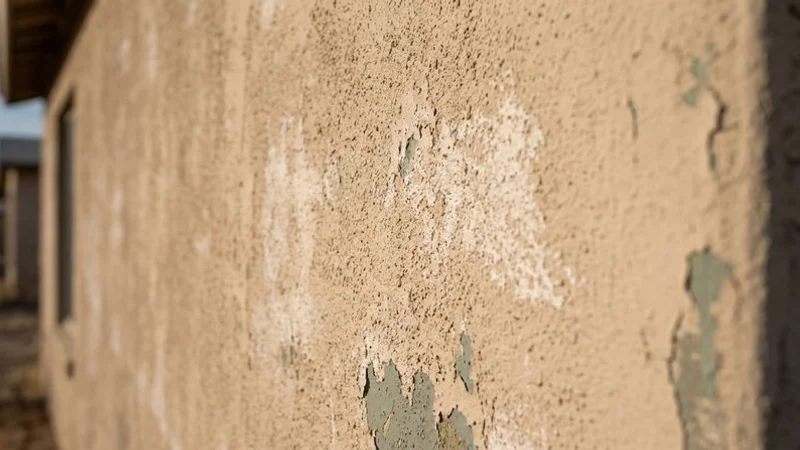
Before paint peels, it usually chalks.
This is the very first sign that the sun has destroyed the protective binder in your paint.
We recommend a simple diagnostic you can do in seconds.
Walk up to a wall that faces south or west and run your finger across the surface.
If it leaves a white, dusty residue on your skin, the paint’s resin has broken down.
This powder means your home is no longer sealed against moisture.
Old paint loses its ability to repel water once this chalking stage begins.
Why this matters now: Once chalking starts, the underlying stucco absorbs moisture during our heavy monsoon storms.
A 2024 report by the Paint Quality Institute notes that acrylic latex paints in desert climates typically begin this degradation process between years 5 and 7 depending on quality.
Ignoring this stage leads directly to the more expensive problem of blistering.
2. Stucco Cracks and “Spiderwebbing”
Stucco is the standard in Phoenix, but it is not invincible.
We inspect hundreds of stucco homes annually and look for two distinct types of failures.
Types of Stucco Damage
- Hairline Cracks (Spiderwebbing): These are thin, surface-level fractures often caused by the initial curing process or thermal expansion. While small, they are entry points for moisture.
- Delamination (The “Hollow” Sound): This happens when the stucco separates from the lath underneath. If you tap the wall and it sounds hollow rather than solid, the integrity is gone.
- Foundation Shift Cracks: These are jagged, stair-step cracks usually found near the corners of windows or doors.
Our team focuses heavily on these areas because painting over a crack without sealing it first is a waste of money.
Proper preparation requires elastomeric patching compounds that stretch with the heat.
Standard caulk often fails within a year when surface temperatures hit 160°F.
3. Faded Color and HOA Compliance Notices
Your house might look fine from the driveway, but your Homeowners Association likely has a stricter view.
We frequently get calls from homeowners in master-planned communities like Ahwatukee or Scottsdale who just received a “correction notice” for faded paint.
Pigment loss is uneven.
The south and west sides of your home absorb significantly more UV radiation than the north side.
This uneven fading makes your home look patchy and neglected.
The “Light Reflectance” Factor: Darker colors (Earth tones common in Arizona) absorb more heat and fade roughly 30% faster than lighter shades.
If your “Red Rock” accent wall now looks like “Dusty Rose,” the protective qualities of the pigment are gone.
We help clients select UV-resistant masonry paints, such as Dunn-Edwards Evershield, which are formulated specifically to hold color in the Southwest.
4. Separated Caulk Around Windows and Trim
Heat causes materials to expand, while cooler winter nights cause them to shrink.
This constant movement destroys the seals around your home.
We pay close attention to the caulk lines where your stucco meets windows, doors, and garage frames.
If you see a gap, water can get behind the stucco.
The Thermal Expansion Problem
| Material | Reaction to 110°F+ Heat | Resulting Damage |
|---|---|---|
| Wood Trim | Shrinks and dries out | Gaps form at joints |
| Stucco | Retains heat | Cracks around rigid frames |
| Vinyl Windows | Expands rapidly | Breaks caulk seals |
A separated seal is an open invitation for termites and water rot.
Our crews cut out the old, failed caulk completely rather than just applying a new bead over the top.
Re-sealing with high-grade, siliconized acrylic caulk is the only way to ensure the gap stays closed during July temperatures.
5. Dry Rot on Fascia and Eaves
Many homeowners assume wood rot isn’t an issue in the desert.
They are mistaken.
We find dry rot on nearly every exterior repaint project that involves wood fascia or patio covers.
The sun dries out the natural oils in the wood, making it brittle and porous. Proper wood staining can help protect these surfaces.
Once that happens, even a small amount of rain from a monsoon storm soaks in and gets trapped.
Where to look: Check the ends of your fascia boards (the wood trim just under your roofline) and the base of your patio posts.
If the wood looks crushed, wrinkled, or feels soft to the touch, the structure is compromised.
Painting over rotten wood is like putting a bandage on a broken arm.
We replace damaged wood features before we open a single can of paint.
This ensures your new paint job has a solid foundation to adhere to.
Professional Expertise in the Desert
Dealing with these issues requires more than just a brush and a bucket.
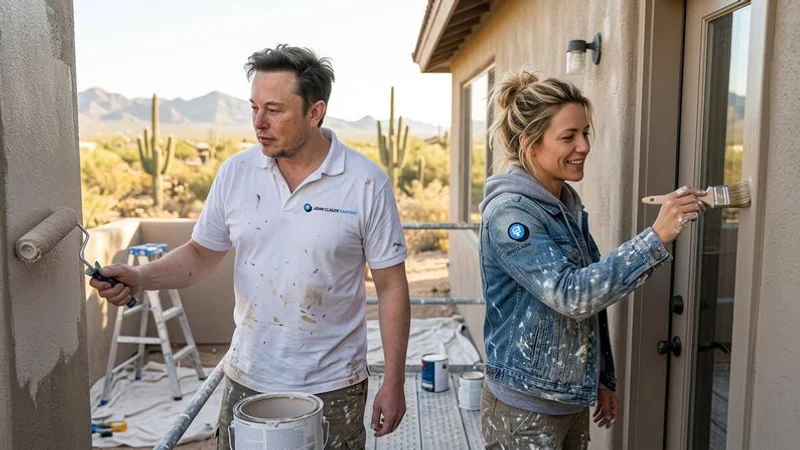
Our team at John Claude Painting has completed over 1,000 projects in the Phoenix Valley.
We understand the specific demands of Arizona’s climate and use products and techniques proven to deliver lasting results.
Why Experience Matters
Arizona homeowners face unique considerations that don’t apply in other parts of the country.
- Temperature extremes: Summer surface temperatures often exceed 170°F on sun-facing walls, cooking inferior paint.
- UV intensity: Phoenix has some of the highest UV index ratings in the world, which breaks down binders rapidly.
- Low humidity: Dry air affects paint drying times (flashing), requiring specific application speeds.
- Monsoon storms: High-velocity dust and rain test every seal and joint on your home’s exterior annually.
Making the Right Choice
The best approach depends on your specific situation.
Factors like your home’s age, the condition of existing surfaces, your budget, and your aesthetic goals all play a role in determining the right path forward.
At John Claude Painting, we provide free, no-obligation estimates that include a thorough assessment of your home’s condition and honest recommendations for the best approach.
Contact us today to schedule your free estimate.
Why Choose John Claude Painting
- Licensed and insured professionals
- 10+ years of Phoenix-specific experience
- Premium products from Sherwin-Williams and Dunn-Edwards
- Thorough surface preparation on every project
- Free estimates with no obligation
Ready to protect your investment?
Request your free estimate or call us at 602-737-1234.
John Claude Painting Team
Professional Painting Contractor
Need Professional Painting Help?
Get a free, no-obligation estimate from our experienced team.
Get Free Estimate